

Learning from the Past and Creating New Legacies of Equitable Vaccination
The development and approval of COVID-19 vaccines marked a historic achievement in modern medicine. The fastest vaccine development in history—efforts to identify the novel COVID-19 and develop a usable vaccine took about a year, and involved collaboration of scientists all over the world.
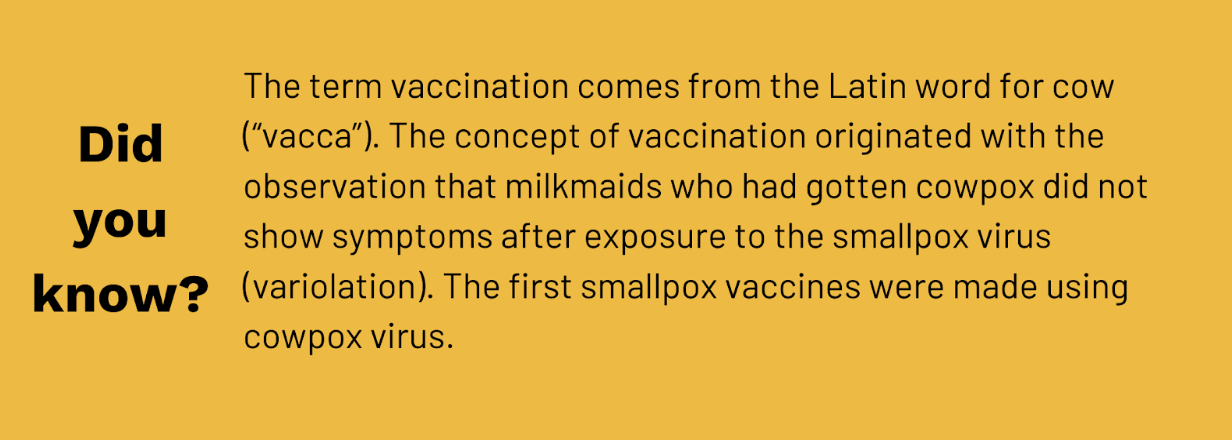
Vaccination is a triumph of public health. Through vaccines, smallpox has been eradicated, wild polio virus has been nearly eliminated, and population levels of preventable infectious diseases like measles and whooping cough are at all time lows. Each season, flu vaccination prevents millions of influenza illnesses in the United States alone.
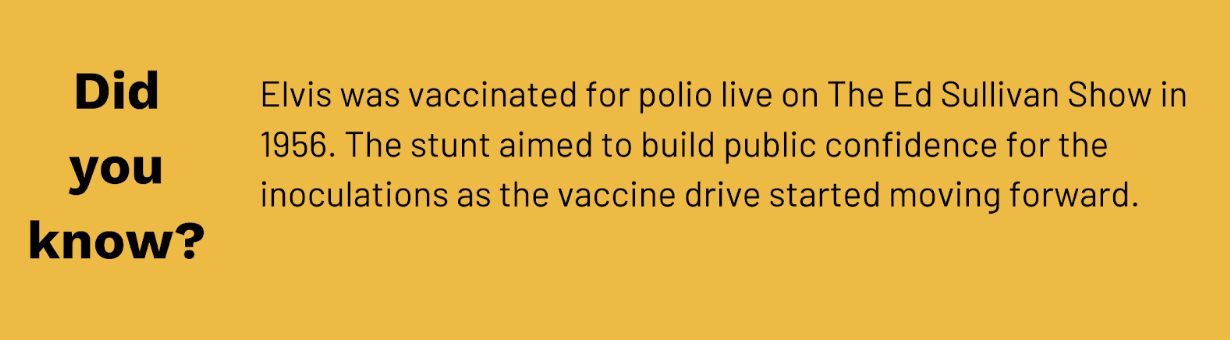
The scale and urgency of COVID-19 vaccine development and distribution have been compared to that of the polio vaccine. The first polio epidemic in the United States began in 1916. Polio, an infectious disease primarily affecting children, plagued American communities for nearly four decades before a vaccine was available. During this period, public support for polio vaccine efforts grew, in no small part due to the influence of President Franklin D. Roosevelt. President Roosevelt fell ill with polio in 1921 and became permanently paralyzed. In 1938, he founded The March of Dimes which in addition to supporting polio patients, crowd-sourced funding for Jonas Salk’s eventual polio vaccine.
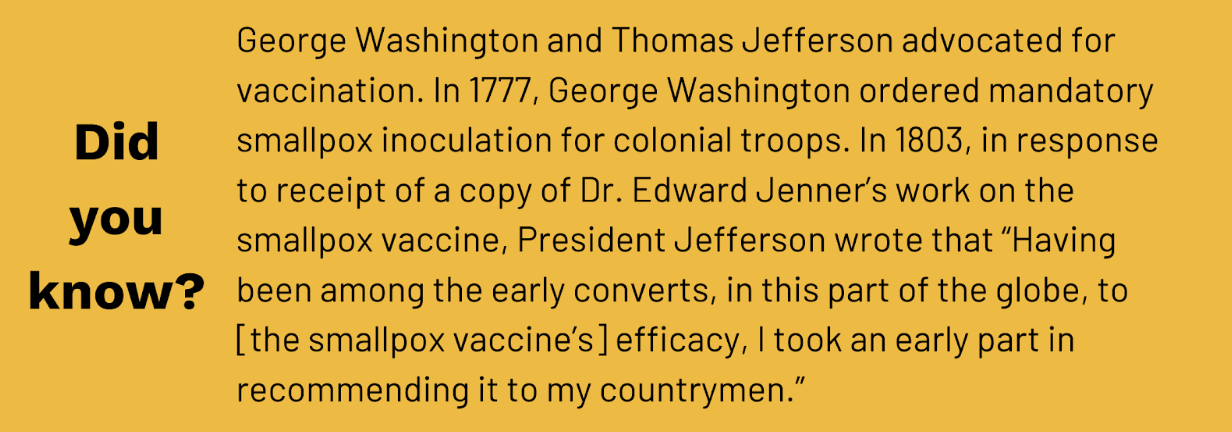
Mass inoculations against polio began in April 1955, led by state and local health officials, and by August of the same year an estimated 10% of U.S. children under the age of 12 (the focus population) had been immunized. New polio cases decreased dramatically in subsequent years. After its U.S. authorization in 1962, an oral polio vaccine was rolled out to the general public; over the next three years, 100 million people—more than half of the nation’s population at the time—would receive the vaccine.
The rollout of COVID-19 vaccines reached a far larger population than the initial polio vaccine drive, overcoming immense logistical and public health challenges. Distribution efforts required large-scale coordination across hospitals, pharmacies, and community sites while ensuring safety amid an ongoing global health crisis. The experience highlighted both the resilience of the healthcare workforce and the importance of strong infrastructure for equitable vaccine delivery.
Previous vaccine drives have been aided by swift, clear action by leaders. In anticipation of a smallpox outbreak in New York City just before Easter in 1947, the city health commissioner Dr. Israel Weinstein responded urgently, warning the public about the smallpox threat and calling for vaccination and revaccination with daily radio addresses and a city-wide poster canvassing campaign. As part of his advocacy, Dr. Weinstein vaccinated New York City Mayor William O’Dwyer in front of news media; reportedly, President Harry S. Truman was also revaccinated during the drive.
Smallpox and polio vaccine drives benefited from broad public support and high levels of public trust in science, medicine, doctors, and political leaders. Public support and trust even survived a catastrophic rollout of the polio vaccine—known as the Cutter Incident—in 1955 which introduced live virus into a vaccine shipment. The contaminated vaccines sickened tens of thousands of children, paralyzed hundreds, and caused eleven deaths. Following a brief suspension to introduce better quality controls, the mass vaccination drive moved forward.
Public trust in vaccines continues to evolve in an era of widespread misinformation, polarization, and rapid information sharing. While most people in the United States have received recommended vaccines, hesitancy persists—often rooted in concerns about safety, side effects, or distrust in institutions. Ongoing efforts by public health leaders, community organizations, and trusted messengers aim to build confidence, promote transparency, and ensure that everyone has access to accurate, science-based information about vaccination.
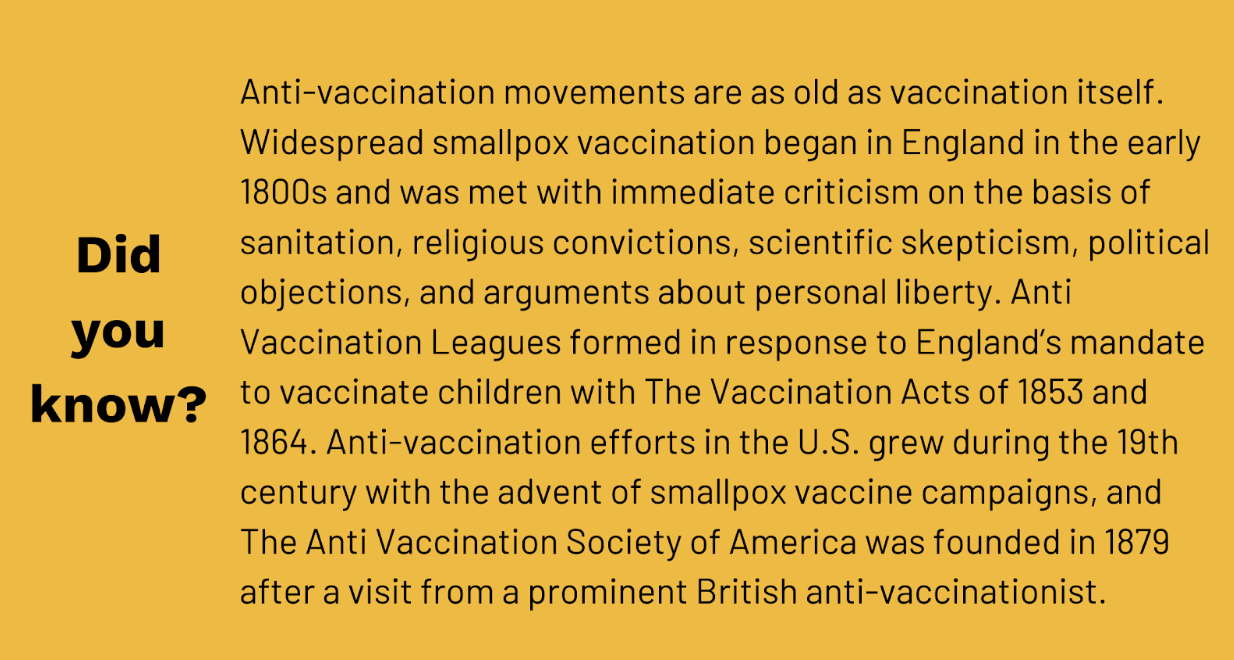
Read more about the history of anti-vaccination movements
Vaccine hesitancy is alarmingly high among Black adults, of whom more than one third say they probably or definitely won’t get vaccinated according to the KFF poll. Among vaccine-hesitant Black adults, half cite general distrust of vaccines as a major reason. This distrust is borne out of the ongoing legacies of racism in our medical system that has exploited and harmed black people since its inception.
Racism has been hardwired into vaccine development and distribution efforts. Racism mars the science of vaccines by upholding structures of privilege in terms of who gets funded to develop vaccines, and in what populations safety and efficacy testing occur. Racism fuels denialism—denial about black people being susceptible to polio, for example, and denial about polio outbreaks in certain black communities. And, of course, racism shows up in vaccine prioritization and delivery.
Racism has long shaped vaccine development and distribution. Structural inequities have influenced who receives funding to develop vaccines, which populations are included in safety and efficacy testing, and how vaccines are prioritized and delivered. During the initial rollout of the COVID-19 vaccines, for example, surveys found that about half of Black adults were “not too” or “not at all” confident that distribution efforts were taking into account the needs of Black communities (52%). This mistrust reflected centuries of inequity and exclusion in medical research and care—legacies that continue to inform public health today. Addressing them requires ongoing commitment to equity, transparency, and meaningful community partnership.
During the COVID-19 vaccine rollout, public health experts expressed concern that vaccine hesitancy could lead to inequitable and suboptimal vaccination rates—slowing recovery while deepening existing health and economic disparities. In response, the CDC implemented a prioritization framework designed to advance equity by ensuring access for all, fostering community-based partnerships, and prioritizing marginalized and medically underserved populations.
The experience underscored the vital role of trust, communication, and equity in public health. As public health practitioners, we continue to have a responsibility to promote vaccine confidence and ensure that all communities are informed, supported, and empowered to protect their health.

The History of Vaccines: Timeline
Resource - Website/webpage
Brought to you by The College of Physicians of Philadelphia

COVID-19 and the Legacy of Racism: Vaccine Hesitancy and Treatment Bias
Resource - Webinar
Brought to you by NIHCM Foundation

How New York City Vaccinated 6 Million People in Less Than a Month
Story - Written
Brought to you by NYT
Published on 12/18/2020

The COVID-19 Vaccination Drive May Be Slow—But It’s Already Faster Than Any in History
Story - Written
Brought to you by Fortune
Published on 01/17/2021

OPINION: Moral Tragedy Looms In Early Chaos Of U.S. COVID-19 Vaccine Distribution
Story - Written
Brought to you by NPR
Published on 01/16/2021

Five Past Vaccine Drives and How They Worked
Story - Written
Brought to you by NYT
Published on 01/25/2021

Related Topics

