
Social Infrastructure
Social infrastructure refers to spaces, institutions, and systems that support connection, trust, and community life, things like parks, libraries, schools, transit, and community centers. Social infrastructure includes formal and informal places where people gather and engage, encompassing the physical spaces themselves and their design, access, and programming.
Social infrastructure supports health, safety, resilience, and belonging. It helps people feel connected and cared for, which is foundational to thriving communities and effective collective action. Communities with stronger social infrastructure tend to see better outcomes across various well-being indicators than communities with weaker social infrastructure, which may be more isolated and vulnerable.
Investing in social infrastructure is a key strategy for addressing today’s crises of loneliness and disconnection. Strengthening social infrastructure promotes social connection and civic life.
Discriminatory policies, disinvestment, and urban renewal efforts have historically dismantled or underfunded social infrastructure in many communities, particularly communities of color. Today, low-income neighborhoods, rural communities, and communities of color are often the most affected by weak or absent social infrastructure. At the same time, these groups have long created and maintained informal networks of support, even in the absence of formal investment.
There is renewed recognition of the importance of social infrastructure in the wake of the pandemic, political polarization, and climate change. Equity in social infrastructure means more than building new facilities; it requires culturally relevant design, sustained investment, and inclusive processes. It also means repairing past harms and ensuring all communities have access to safe, welcoming, and well-resourced spaces.
Social infrastructure is a vital component of community systems that influence health, housing, transportation, education, and civic life. It supports well-being not in isolation but as part of an interconnected ecosystem that shapes daily life and long-term opportunity. At a systems level, social infrastructure influences health, housing, transportation, education, and democracy. Change at scale involves public and philanthropic investment, policy alignment, and cross-sector collaboration. Locally, changemakers can co-create inclusive spaces, activate underused areas, and advocate for resources to sustain them, advancing health equity and community power from the ground up.
Resources & Tools

The Changemaker's Guide: A Community Planning Curriculum
Resource - Guide/handbook
Published on 01/01/2014

The Relationship Between Community Development and Health
Resource
Brought to you by Health Impact Project

Thriving Together: A Springboard for Equitable Recovery and Resilience in Communities Across America
Resource - Report
Brought to you by Well Being Trust

With Roles as Civic Hubs, Libraries Turn Over a New Page
Resource - Blog
Brought to you by Bloomberg L.P.


Social Connection as a Public Health Issue: The Evidence and a Systemic Framework for Prioritizing the “Social” in Social Determinants of Health
Resource - Journal Article
Brought to you by Annual Reviews
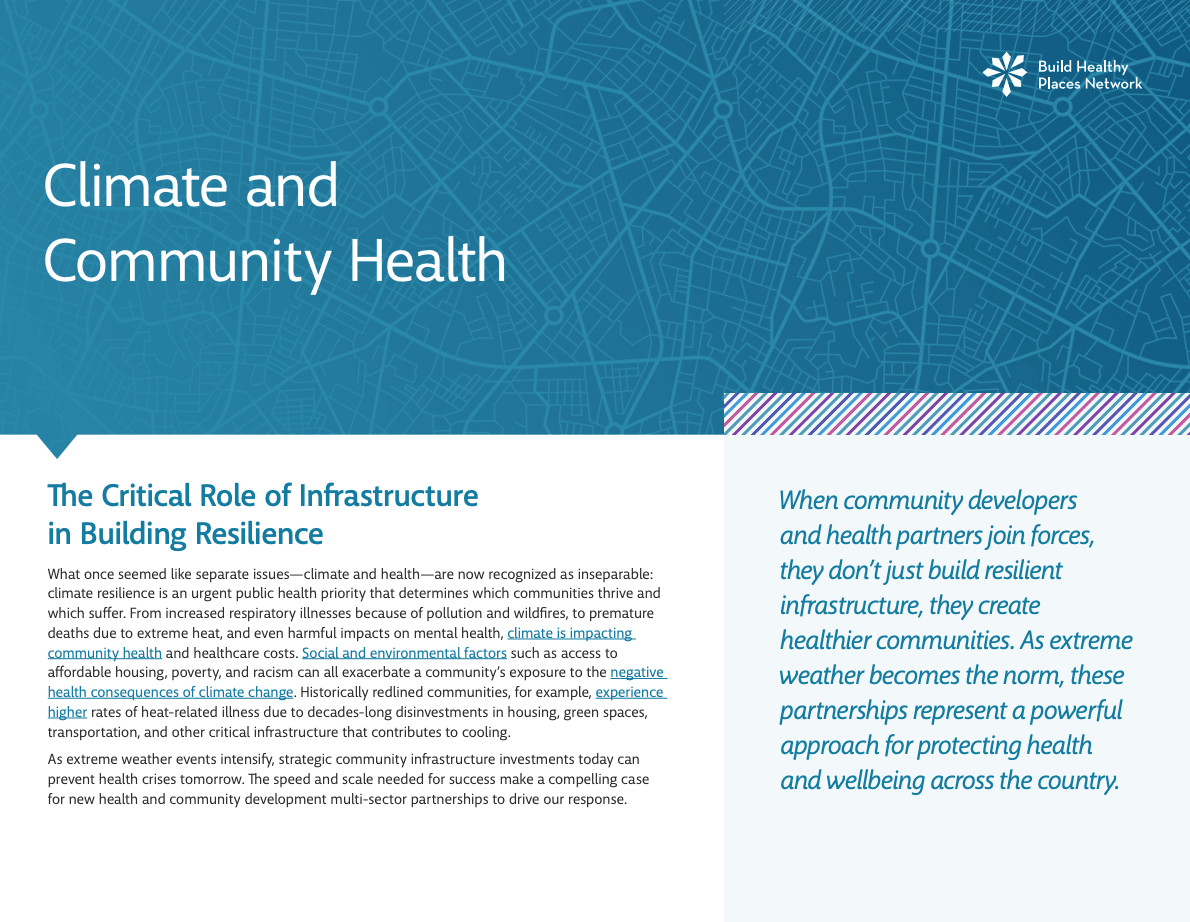
Climate and Community Health Factsheet: The Critical Role of Infrastructure in Building Resilience
Resource - Fact Sheet
Brought to you by PHI
Social Infrastructure is Essential Infrastructure
Resource - Report
Brought to you by Gehl Institute


The Value of Green Infrastructure: A Guide to Recognizing Its Economic, Environmental and Social Benefits
Resource - Guide/handbook
Brought to you by CNT

Social Infrastructure and the Public Life of Cities: Studying Urban Sociality and Public Spaces
Resource - Journal Article

Equitable Economic and Community Development Policy Guide
Resource - Guide/handbook
Brought to you by WIN Network

Making Healthy Places: Designing and Building for Health, Well-Being, and Sustainability
Resource - Journal Article


The Built Environment and Its Relationship to the Public’s Health: The Legal Framework
Resource - Journal Article


To Build a Healthier City, Begin at the Sidewalk
Story - Written
Brought to you by Bloomberg L.P.
Published on 02/21/2023

Related Topics