

H5N1 Avian Influenza (Bird Flu)
H5N1 is a type of bird flu, a virus that mainly infects birds but can also spread to mammals and people through direct contact with infected animals or their fluids. It does not spread easily from person to person.
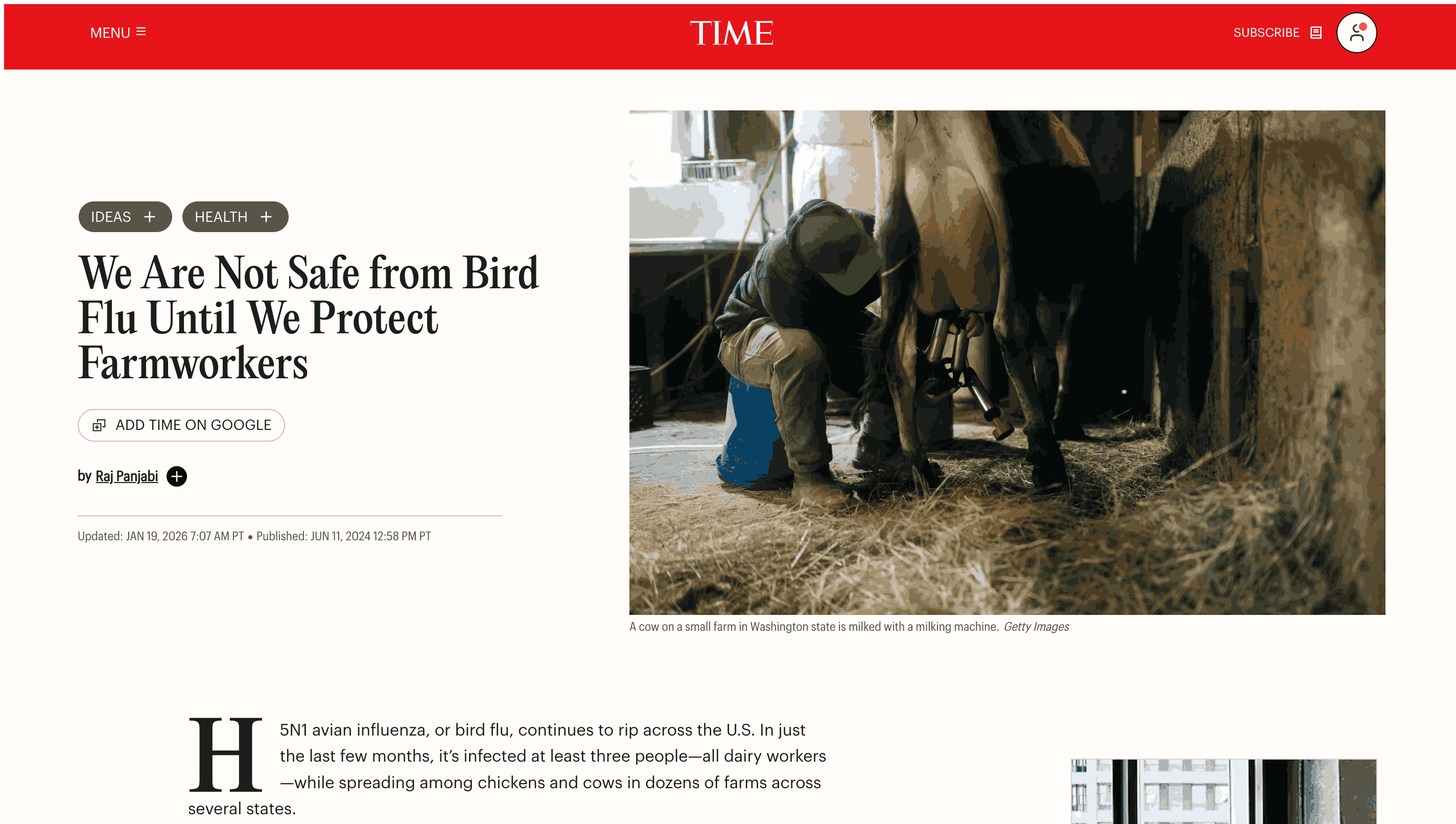
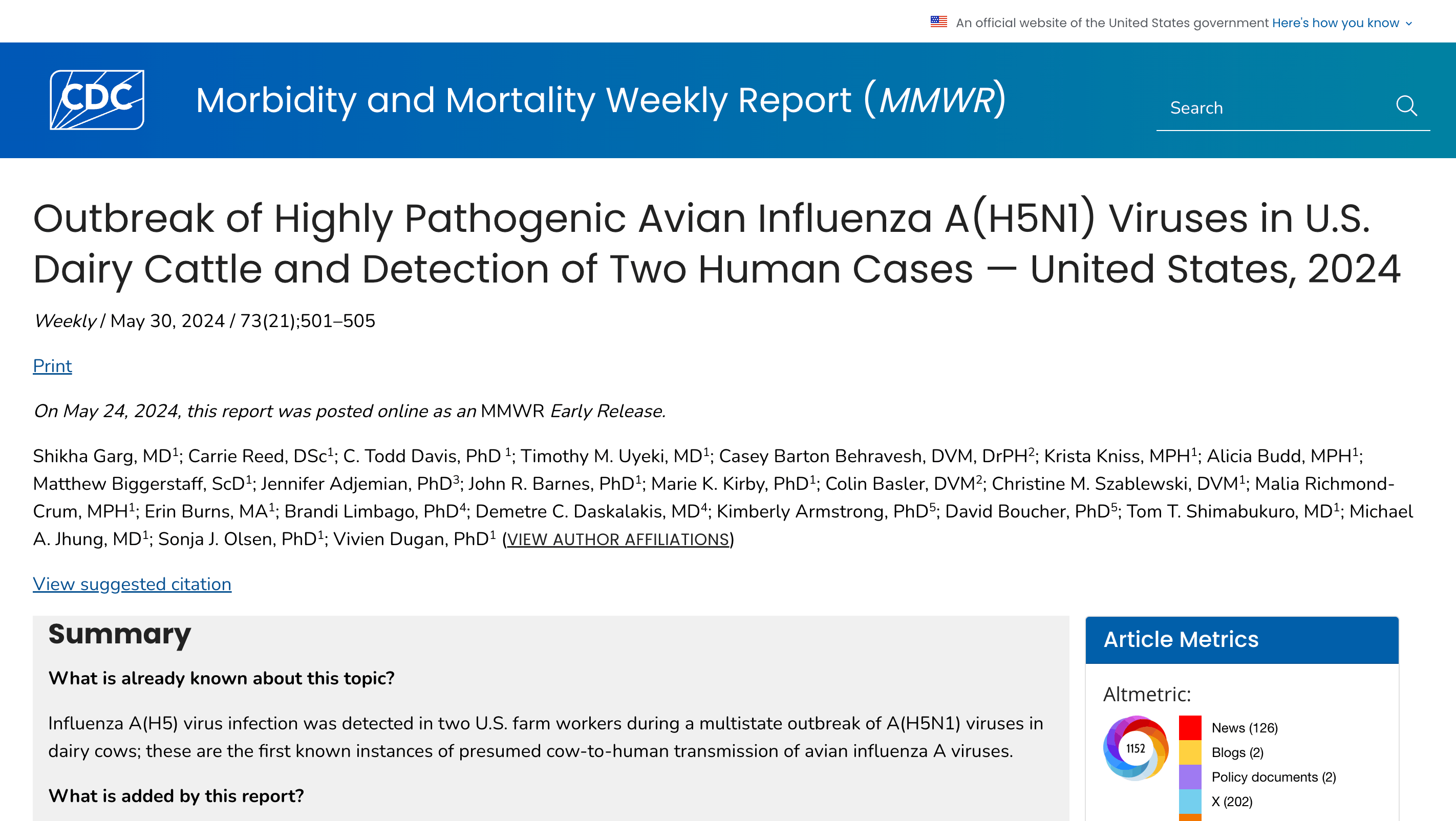
H5N1 is one of the most closely watched pandemic risks in the world. Since March 2024, the U.S. has seen an outbreak among cows on dairy farms and on poultry farms unlike anything in the country's history. While the risk to the general public is low, the virus spreads across animal populations, has appeared in over a dozen states, and has also infected 71 people. Protecting farm workers, building stronger disease monitoring, and ensuring equitable access to care are the most urgent needs.
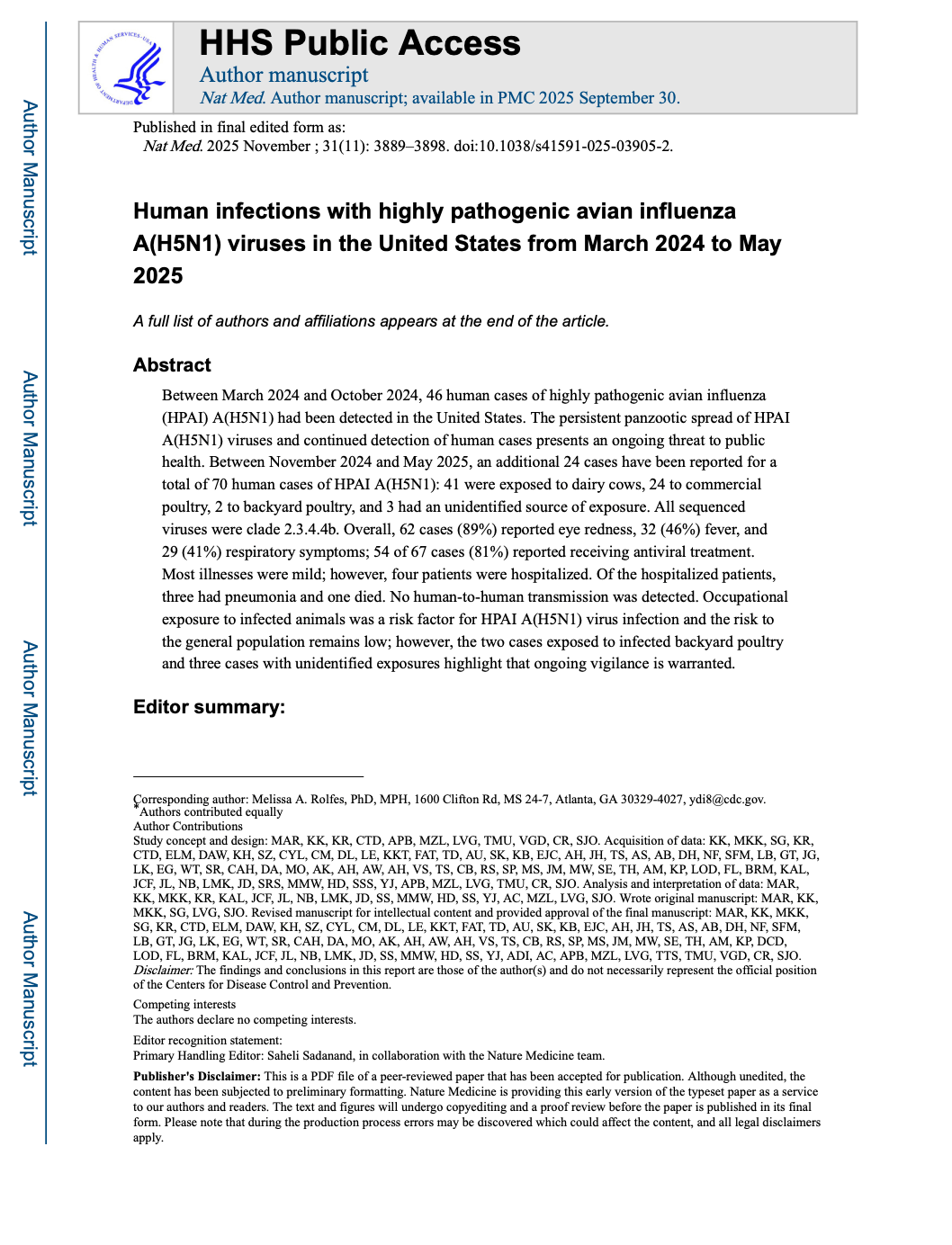
From 2024 through May 2026, 71 human H5N1 cases were confirmed across 13 states, the largest U.S. outbreak on record. Two deaths have been linked to the outbreak, including the world's first human H5N5 case in Washington State in November 2025. H5N1 has also been confirmed in dairy herds across 19 states and hundreds of wild bird species globally.
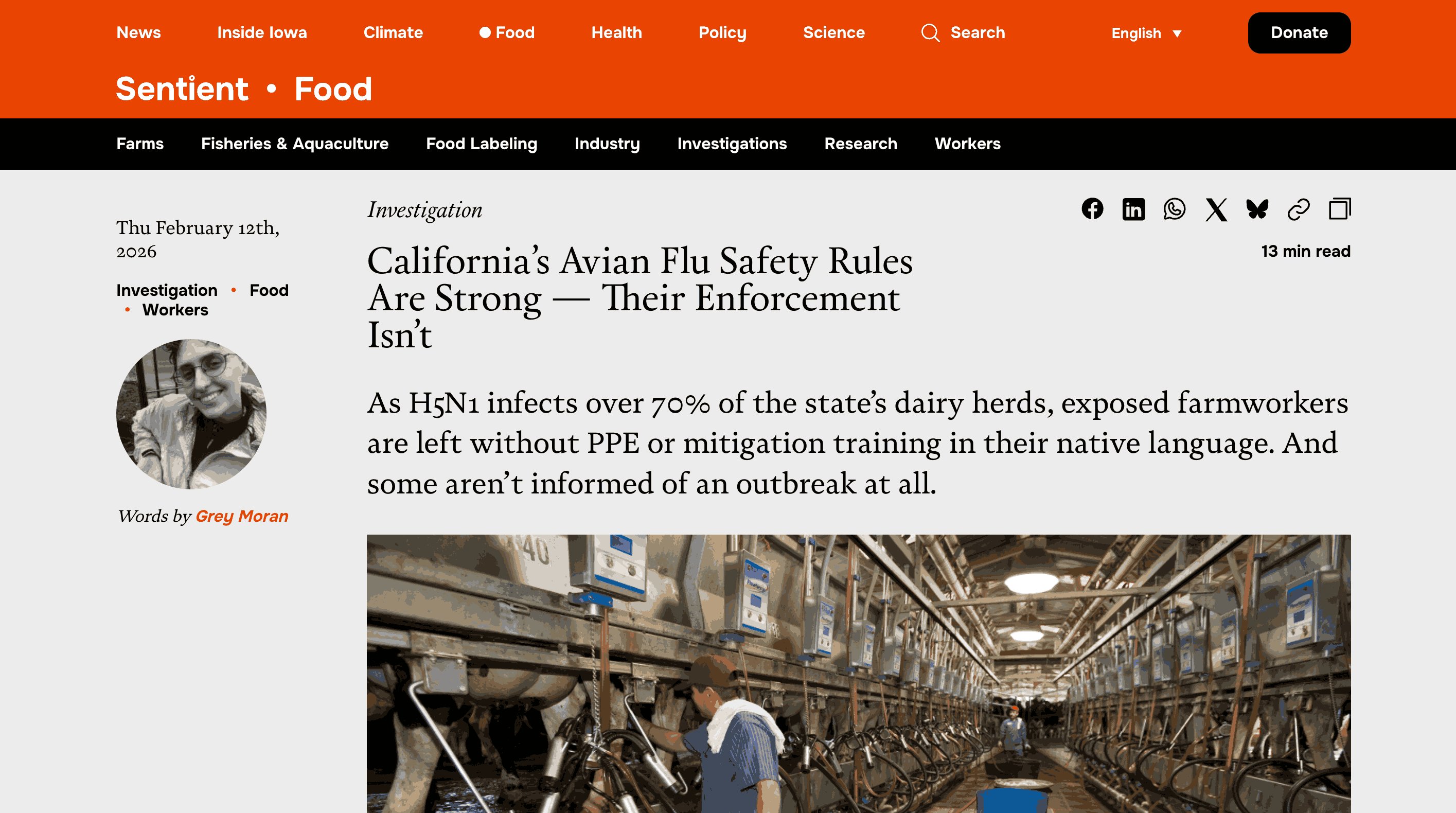
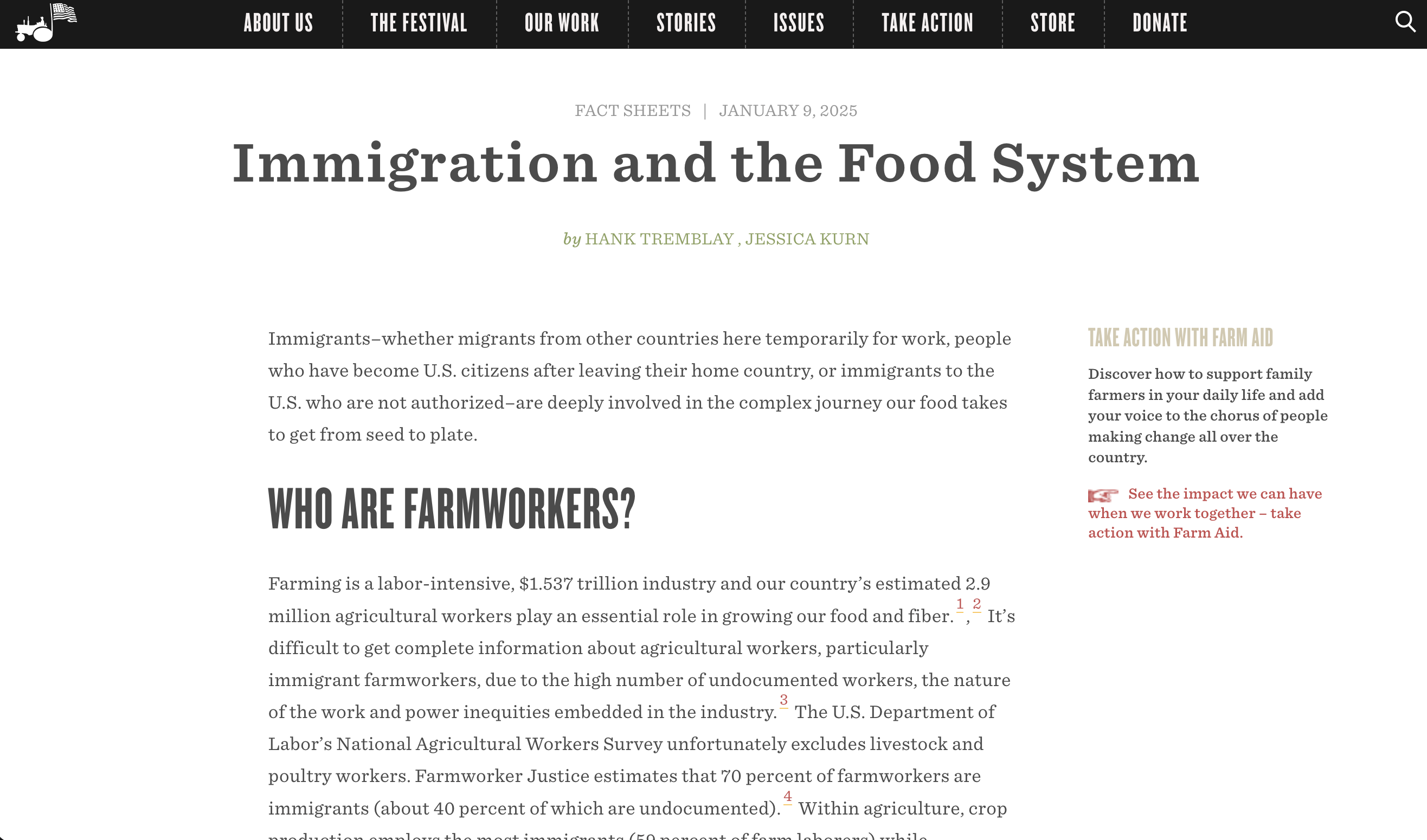
H5N1 first infected people in Hong Kong in 1997. The 2024 U.S. dairy cattle outbreak was unexpected; cattle had not been recognized as a significant host, and CDC and USDA staffing cuts made a fast response harder. Farm workers carry the greatest risk. About 70% of U.S. farmworkers are immigrants, roughly 40% undocumented, and only 48% have health insurance. In California, where over 70% of dairy herds were infected, many workers were not given protective gear or told about the outbreak. Fear of immigration consequences discourages reporting and testing.
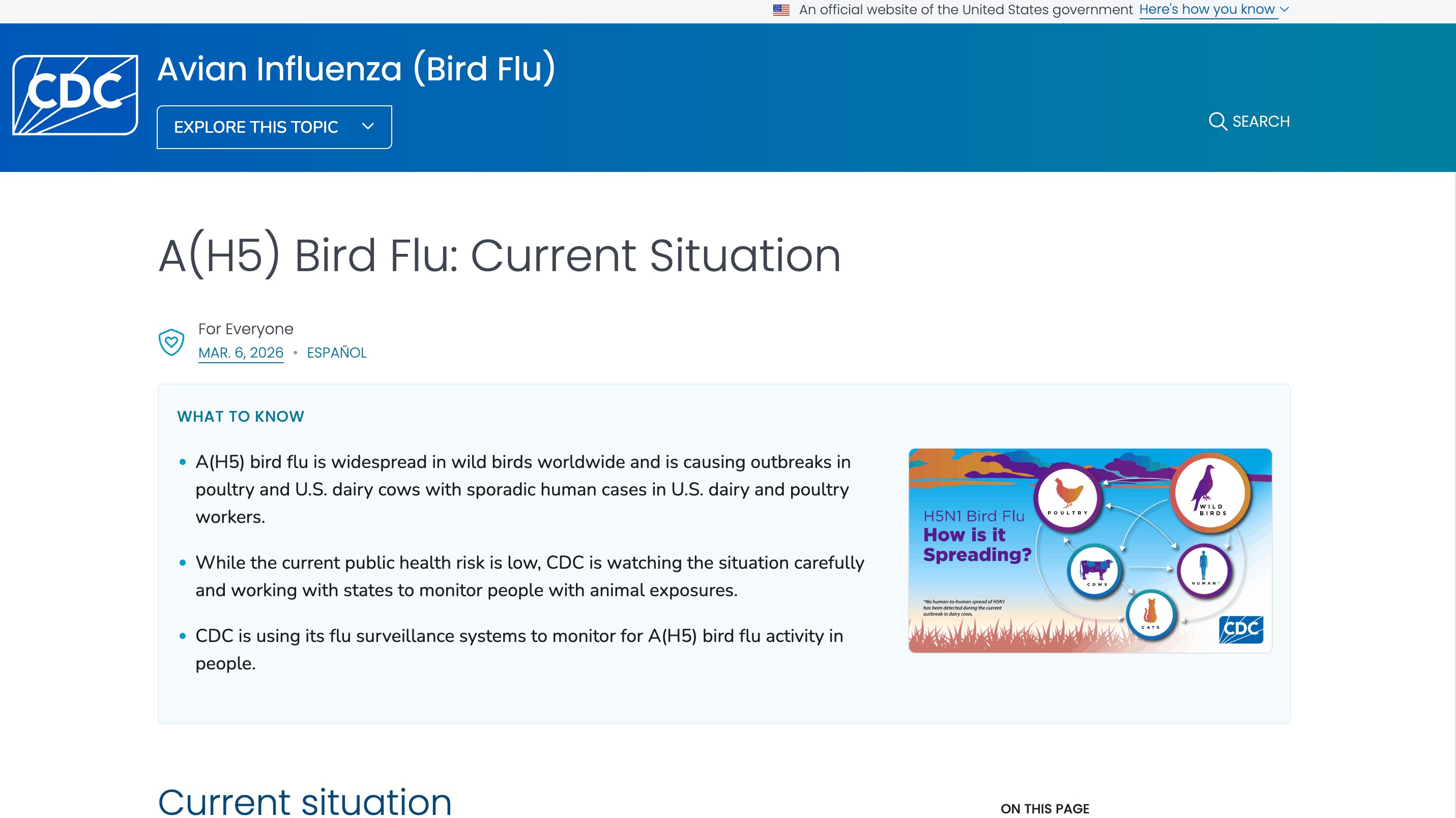
As of July 2026, H5N1 continues to spread in U.S. poultry and dairy cattle with occasional human cases among farm workers. Public risk remains low;no person-to-person spread has been confirmed. The CDC is not recommending H5N1 vaccination for the public but is preparing vaccines. A California hospital study found H5N1 in a toddler with no known animal contact, raising concern that some community cases are being missed.
H5N1 disproportionately affects those already facing barriers to care. Farm workers may be undocumented, uninsured, or far from medical services. Among affected states, only Colorado provides state health coverage regardless of immigration status. Protective gear use and testing remain low. Pasteurized dairy and cooked poultry are safe, but the virus has been found in raw milk. The most common symptom is eye redness (89% of U.S. cases), easy to mistake for something else. Tamiflu works well when started early. CDC clinical guidance is available for providers.
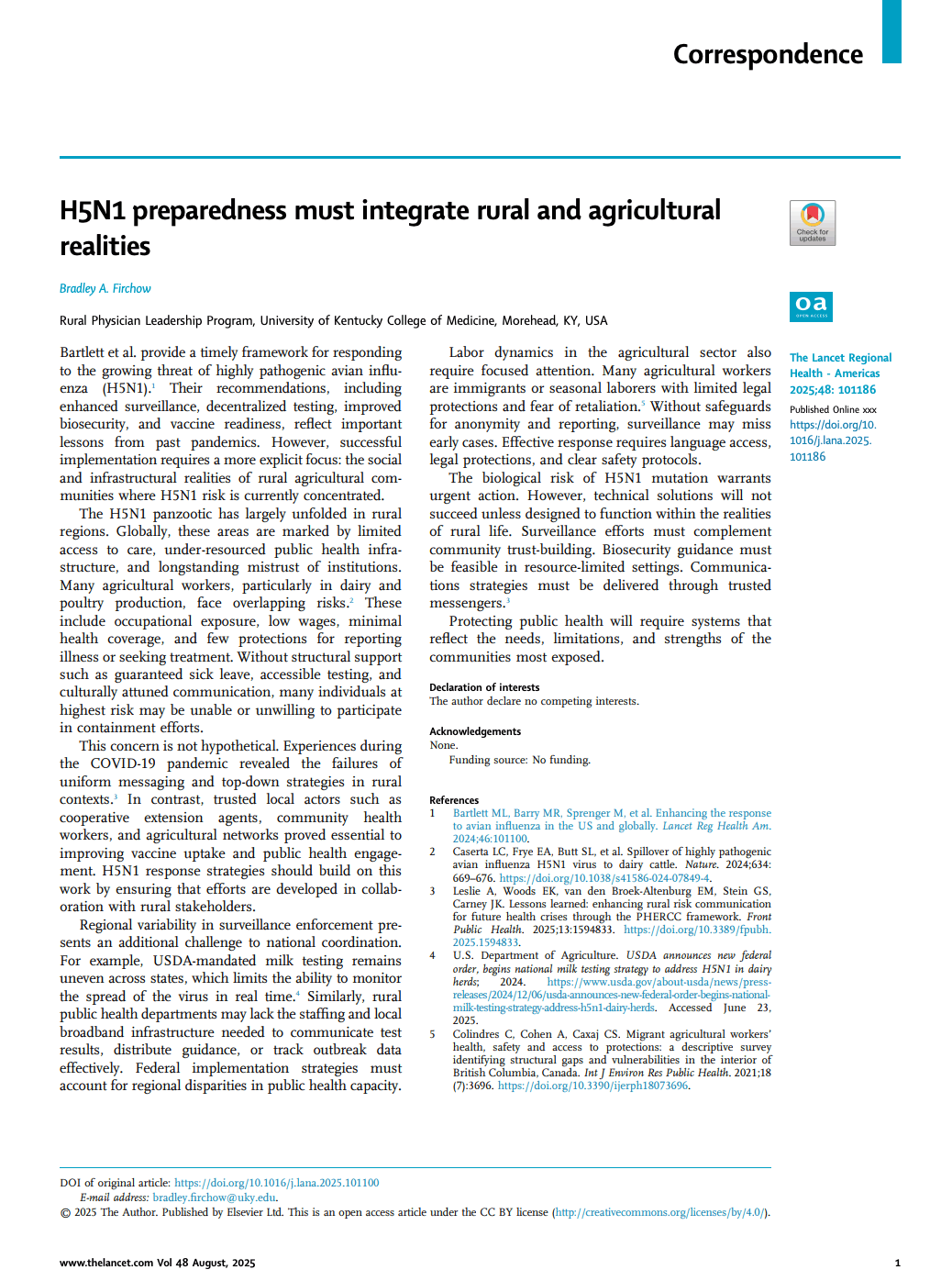
H5N1 sits at the crossroads of pandemic readiness, agriculture policy, immigration, and health equity. Most countries lack strong monitoring at the human-animal interface, so true infection counts are likely much higher. When undocumented, uninsured workers cannot safely report symptoms, the healthcare system loses a key early-warning signal. Experts agree coordination across sectors must happen before, not after a pandemic.
Key actions include expanding One Health monitoring at the human-animal interface; speeding up mRNA vaccine development; extending health coverage to undocumented farm workers; requiring employers to provide free protective gear and protect workers who report illness; and building a wider testing system.
Community health workers and promotors are essential for reaching farm workers with clear, culturally appropriate information on H5N1 risks, symptoms, and care. The National Center for Farmworker Health (NCFH) has built dairy worker assessment tools others can replicate. Groups like Farmworker Justice and the Migrant Clinicians Network connect workers to mobile health services. Communities can also push for local rules requiring farms to notify workers of H5N1 detections and guarantee testing will not trigger immigration consequences. Encouraging seasonal flu shots among farm workers is a simple, immediate step that strengthens our early warning system.
Resources & Tools
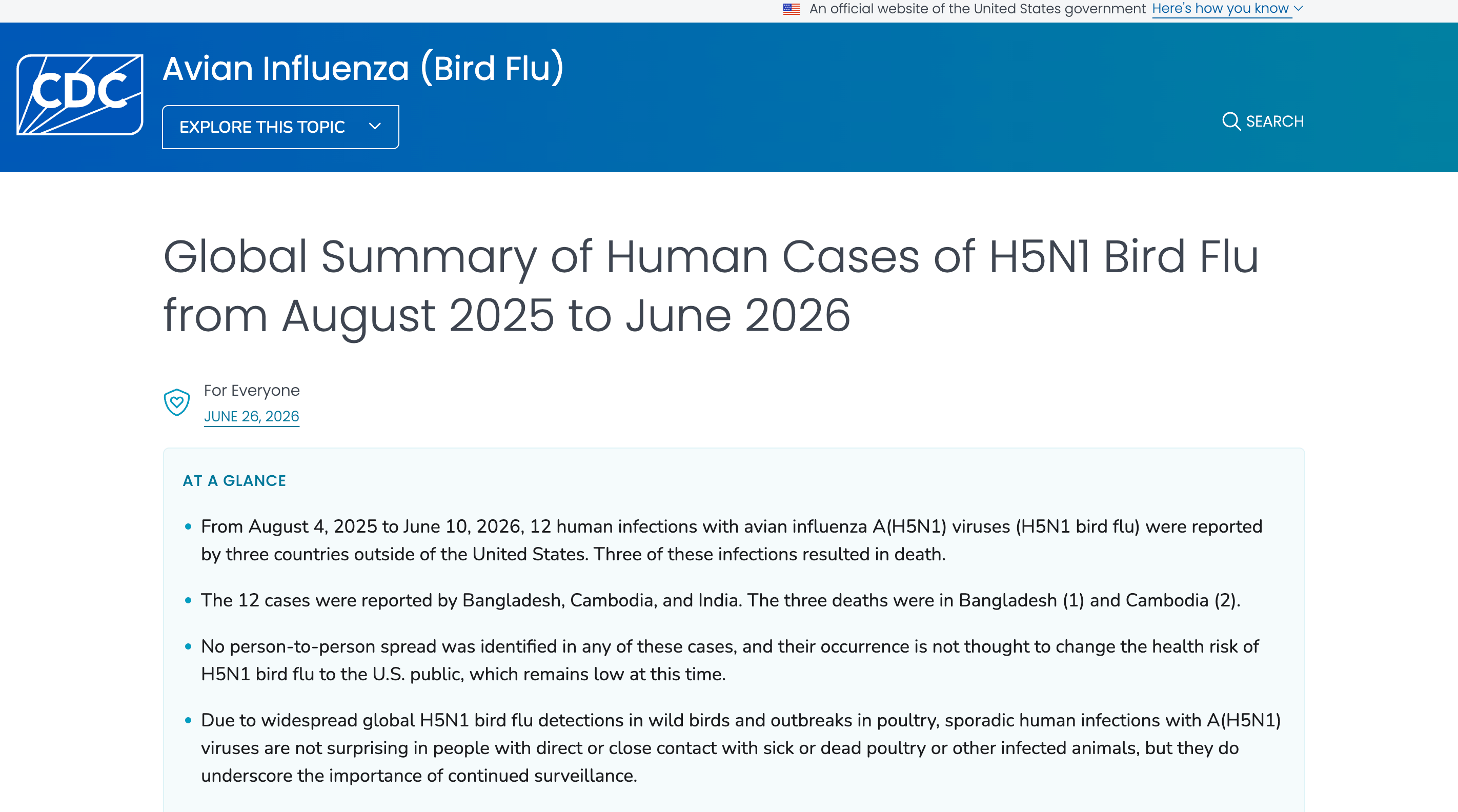
Global Summary of Human Cases of H5N1 Bird Flu from August 2025 to June 2026
Resource - Website/webpage
Clinician Update on Human Cases of H5N1 and Influenza A Virus Surveillance
Resource - Website/webpage

Related Topics
