

Measles
Measles is a highly contagious airborne virus; just one sick person can infect up to 18 others who are not protected. Measles resurgence means the disease is coming back in places that had once eradicated it, mainly because too few people are vaccinated. The U.S.declared measles eliminated in 2000, but that status is now at serious risk.
Every measles case today was preventable the MMR vaccine is 97% effective after two doses and has existed for over 60 years. This resurgence is not a medical failure; it is the result of falling vaccination rates, vaccine misinformation, and cuts to public health programs.
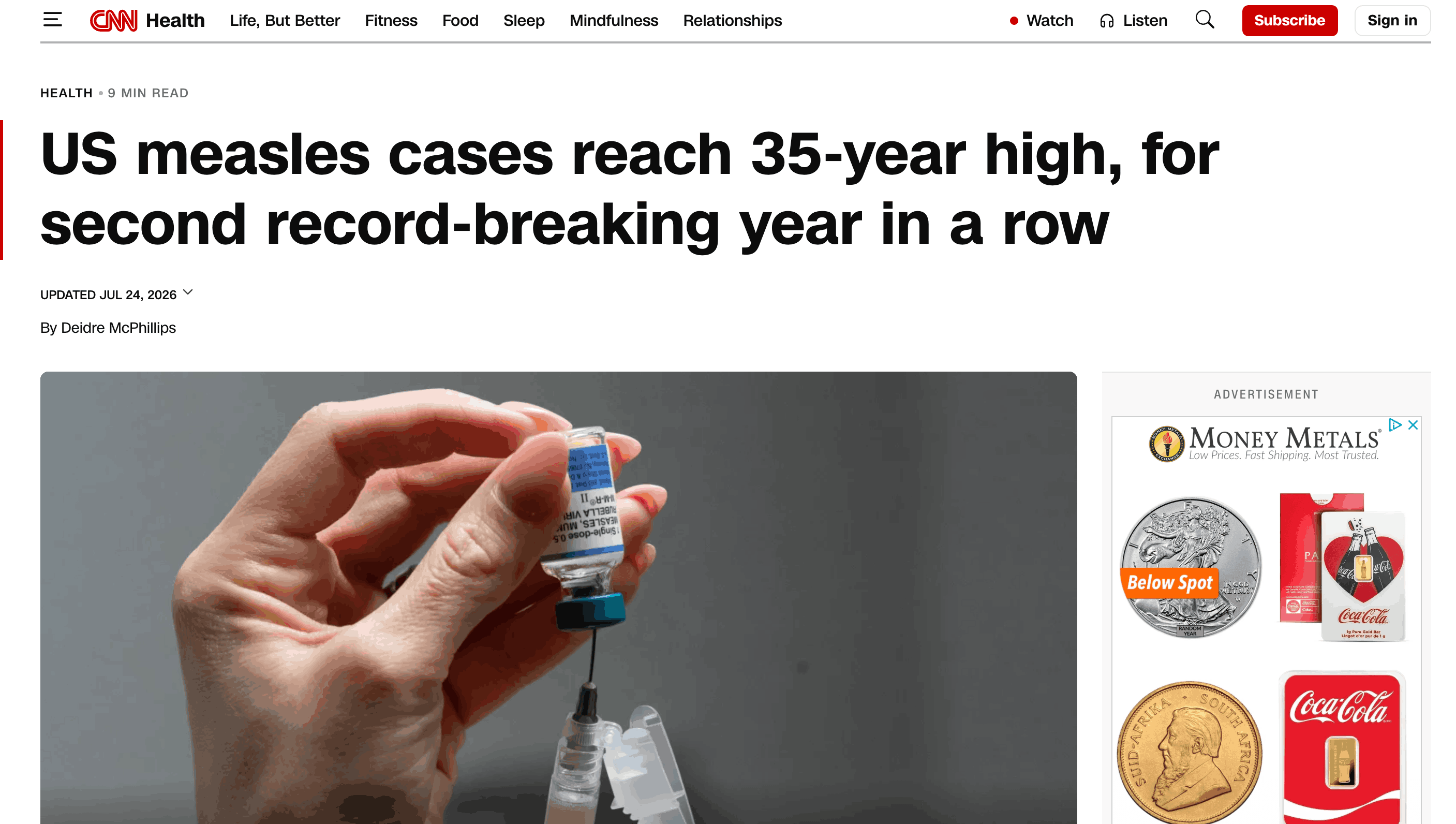
From January 2025 through late July 2026, more than 4,600 measles cases were confirmed across 48 states, more than in the prior 25 years combined. Three people died from measles in 2025, the first measles deaths in the U.S. since 2015. By mid-2026, annual cases were already on pace to break 2025's record. The U.S. now faces a November 2026 review from Pan American Health Organization (PAHO) that could cost the country its measles elimination status, a designation Canada lost in 2025 after a similar outbreak.
Vaccination programs introduced in the 1960s brought measles cases close to zero in the U.S. But vaccine confidence has eroded, driven by a debunked 1998 study falsely linking MMR to autism, pandemic-era disruptions to childhood shots, and fast-spreading misinformation online. Kindergarten MMR coverage fell to 92.5% in 2024-2025, below the 95% needed to protect communities, leaving an estimated 280,000 kindergartners unprotected. Children under five face the highest risk, with a 23% hospitalization rate. Communities with low vaccine uptake due to religious beliefs, distrust, language barriers, or lack of healthcare access are most affected. The 2025 outbreak started in a Mennonite community in West Texas and spread to nearly all 50 states. States like Idaho, where MMR coverage is only 78.5%, remain at very high risk.
More cases have been reported in the first half of 2026 than in all of 2025. Wastewater testing for measles is now detecting silent spread in several states before clinical cases are found. Families who already face barriers to healthcare immigrants, low-income households, and people in rural areas carry the heaviest burden. Texas officials had to produce materials in Low German, Spanish, and English to reach the community at the center of the outbreak. Federal cuts to vaccine funding and advisory panels have weakened the systems communities depend on most and the harm falls hardest on those with the fewest other resources.
Measles is not mild. It can cause pneumonia, brain swelling, blindness, and death. It also temporarily weakens the immune system for months after infection. There is no treatment; only the vaccine prevents it. Providers should look for fever, cough, red eyes, and rash in unvaccinated patients. CDC case reporting guidance is available. "This is a public health failure, and it's avoidable," said the president of the American Academy of Pediatrics. The vaccine works. The resurgence reflects policy choices that weakened school vaccine requirements, normalized exemptions, and defunded public health programs. States that ended non-medical exemptions saw clear gains in coverage. A weakened immunization system puts everyone at greater risk, not just from measles, but from all vaccine-preventable diseases.
Reversing the resurgence requires restoring federal vaccine funding and advisory infrastructure; keeping strong school vaccination requirements; expanding free vaccine access for uninsured and low-income families; investing in multilingual, culturally appropriate vaccine communication; and using wastewater-based measles monitoring as an early warning tool nationwide. Community health workers, school nurses, and faith leaders are the most trusted messengers for reaching communities with high exemption rates. Public Health Communications Collaborative and the Immunization Action Coalition offer ready-made tools for local outreach. Communities can push for school-based vaccination clinics, evidence-based exemption policies, and catch-up immunization campaigns for children who missed doses during the pandemic. Rebuilding trust one conversation and one community at a time is the path back to elimination.
Resources & Tools
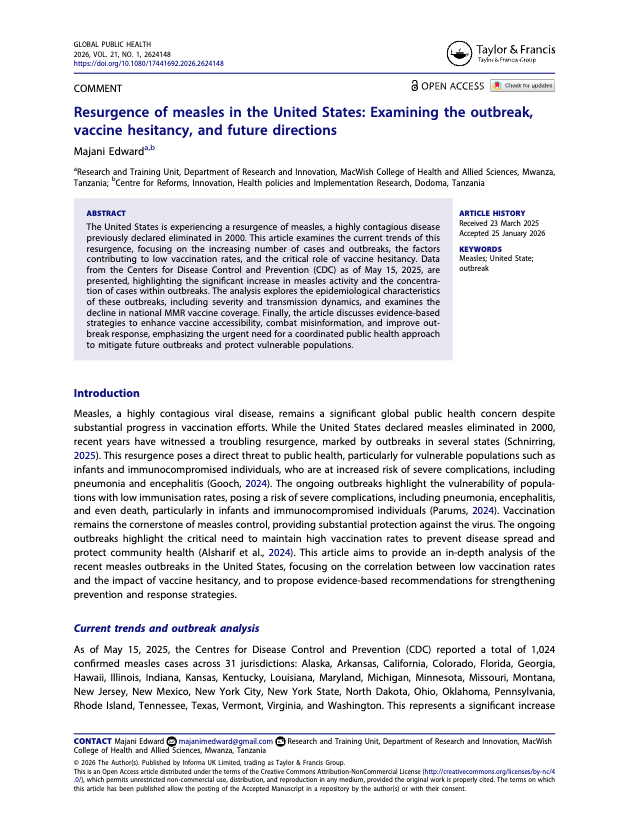
Resurgence of Measles in the United States: Examining the Outbreak, Vaccine Hesitancy, and Future Directions
Resource - Journal Article
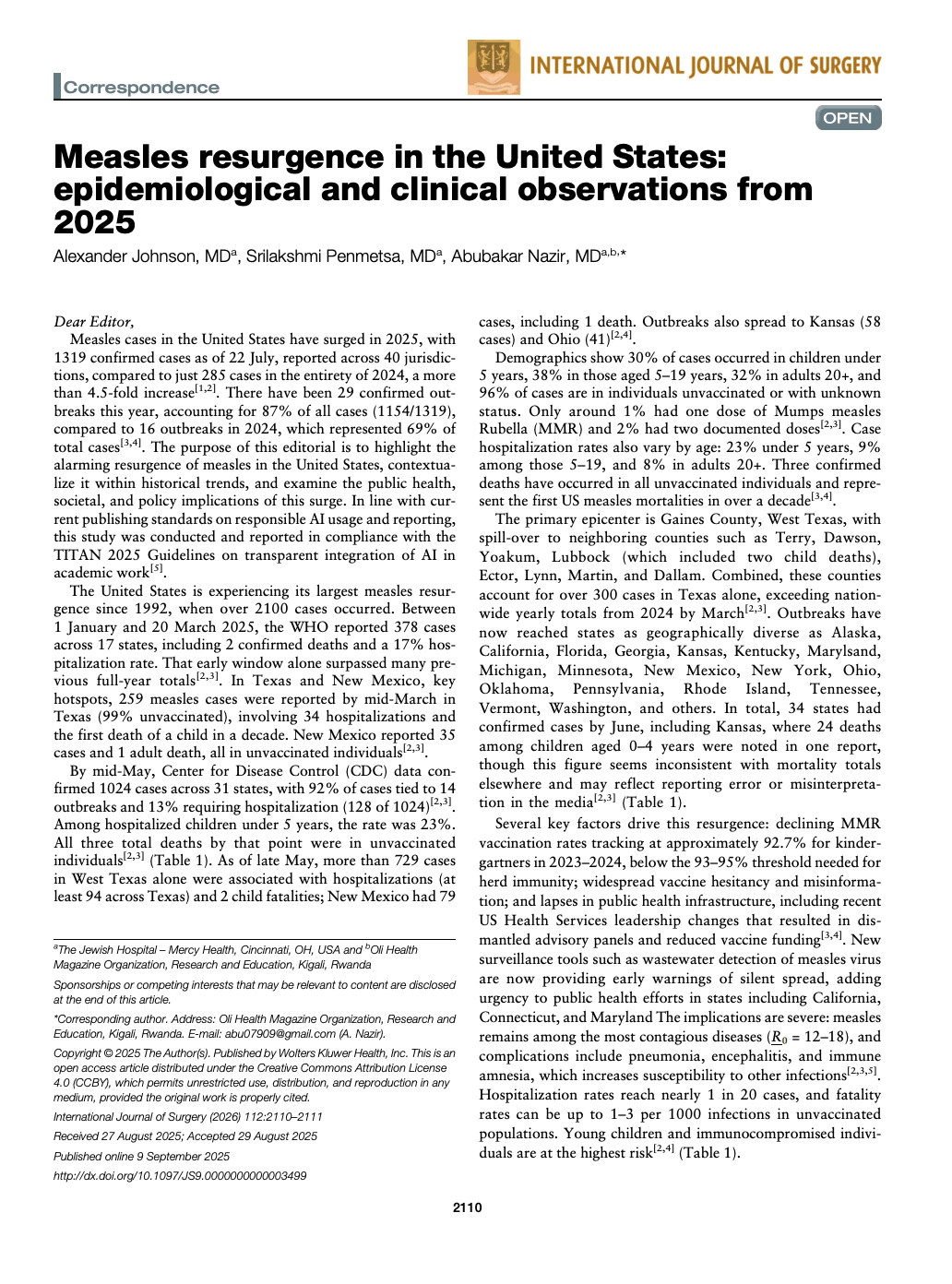
Measles Resurgence in the United States: Epidemiological and Clinical Observations From 2025
Resource - Journal Article
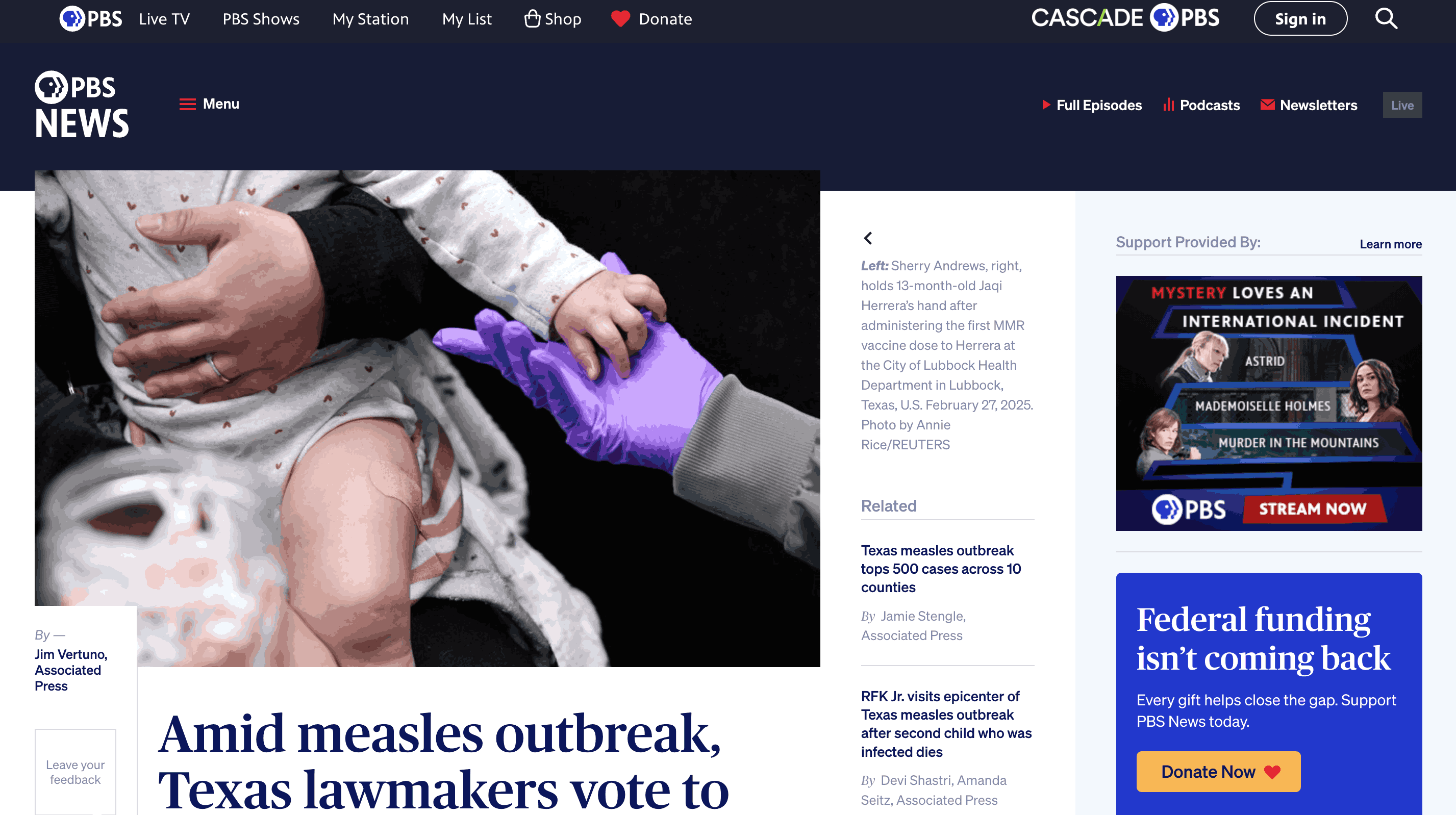
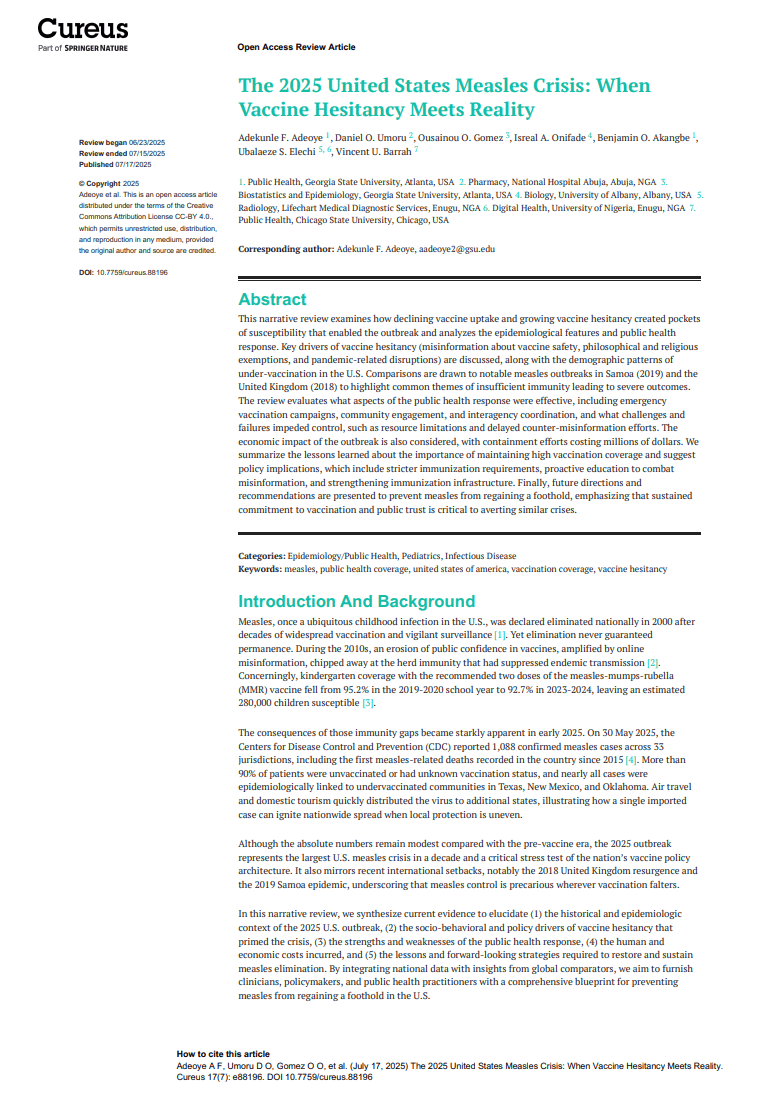
The 2025 United States Measles Crisis: When Vaccine Hesitancy Meets Reality
Resource - Journal Article


Related Topics
